
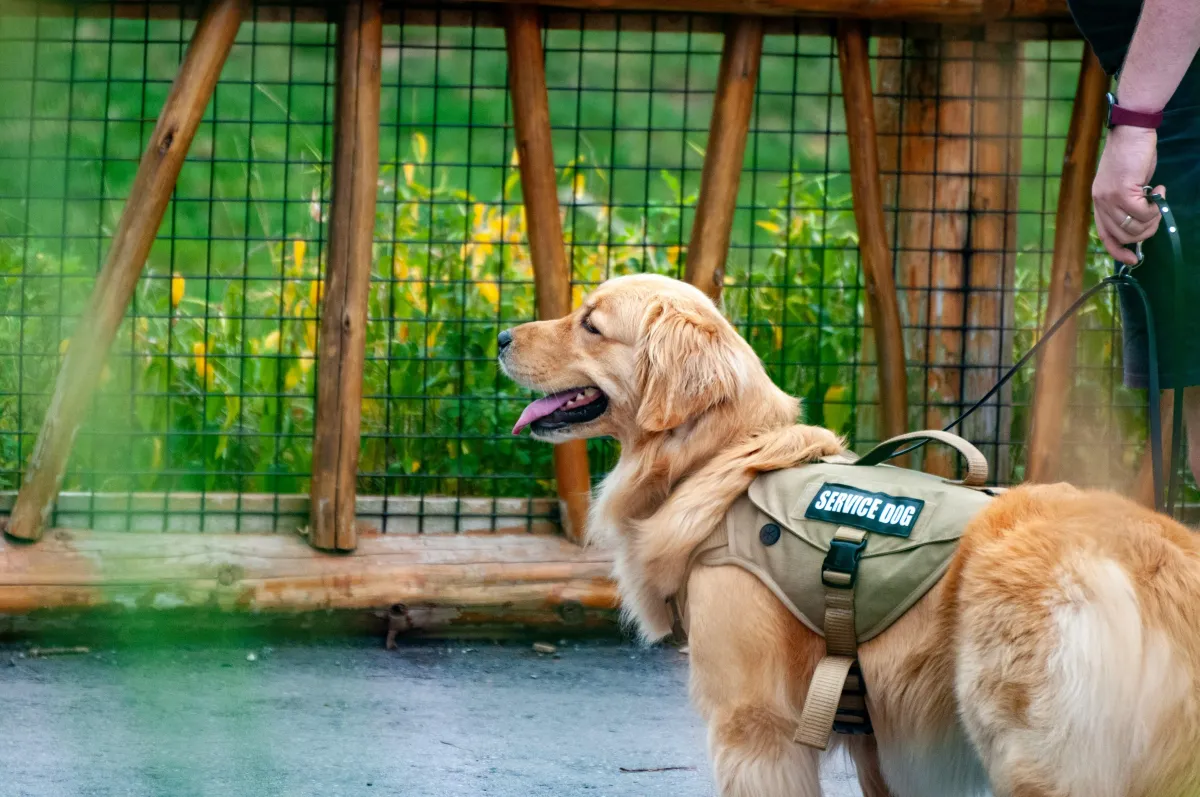
Impactful Service Dogs for PTSD: Find Hope
Service dogs for PTSD help by stopping anxiety episodes, giving comfort through deep pressure, and making their owners feel safe. Research shows that veterans with these dogs have less depression and a better quality of life. These special dogs train for up to 2 years to help people handle daily struggles.
How Service Dogs for PTSD Make a Difference
Living with PTSD can make everyday life feel overwhelming.
But a well-trained service dog for PTSD does more than offer companionship—it provides stability, security, and emotional support right when it’s needed.
For those of us with PTSD, daily situations can bring sudden anxiety, fear, or isolation.
These animals step in during those tough moments, helping us feel grounded and in control again.
The benefits go beyond just emotional support.
Research shows that veterans with specially trained canine companions experience less depression, more social engagement, and an overall better quality of life.
These dogs help calm panic episodes, reduce hypervigilance in crowded spaces, and bring steady reassurance throughout the day.
But their help doesn’t stop there.
Service dogs for PTSD assist with daily tasks based on their handler’s unique needs.
They can wake us from nightmares, stand between us and crowds, and remind us to take medication.
They’re even trained to sense anxiety before it takes over, using gentle nudges, licking, or deep pressure therapy to interrupt it.
Over time, these small but powerful actions help us re-engage with the world more easily and confidently.
For someone living with PTSD, the impact of a skilled service dog can be life-changing.
Their support, training, and constant presence offer something that traditional therapy alone often can’t—helping us move through life with less fear and more independence.
What Service Dogs for PTSD Can Do
Service dogs for PTSD do more than provide companionship—they’re specially trained to help with real challenges.
Their training takes about 18 to 24 months, making sure they can handle life-changing tasks for their handlers.
One of their most important skills is stopping anxiety episodes.
If someone starts feeling overwhelmed or has a panic attack, a specially trained dog steps in.
They might nudge, lick a hand, or press their body against their handler.
This grounds them and keeps symptoms from getting worse.
Deep pressure therapy is another powerful tool.
A dog uses their weight—either by leaning on their handler or placing their paws on their lap—to provide calming pressure, much like a weighted blanket does.
Crowds can be tough for someone with PTSD.
A trained canine knows how to create space between their handler and other people.
By standing in front or behind, they form a barrier that makes public settings feel safer.
This extra space helps the handler stay in control and avoid feeling trapped or overstimulated.
Every person with PTSD has different needs, so these dogs learn personal skills, too.
Some wake their handler from night terrors.
Others notice early signs of distress and interrupt negative thoughts by nudging or distracting their person.
Because they go everywhere with their handler, service dogs for PTSD must follow strict behavior rules.
They get intensive social and obedience training so they stay focused, calm, and ready to assist—no matter where they are.
Who Can Get a PTSD Service Dog?
If you have PTSD, you might wonder if service dogs for PTSD are right for you.
Not everyone qualifies automatically.
To be eligible, you need a formal PTSD diagnosis from a licensed mental health professional.
But a diagnosis alone isn’t enough—you must also show that an assistance animal can provide specific help, like grounding you during anxiety attacks or waking you from nightmares.
Both veterans and civilians can qualify.
However, you need to prove that PTSD impacts your daily life in a major way and that a specially trained dog would help you function better.
Many programs prioritize veterans since PTSD is common among those who have served, but civilians with severe PTSD can also qualify through nonprofit organizations.
How to Apply and Get Matched
Getting service dogs for PTSD isn’t as simple as just signing up.
The process ensures that you and the dog are a good match.
First, you’ll need to fill out an application.
This usually includes medical documentation and a personal statement about how PTSD affects you.
Some programs require a referral from your therapist or psychiatrist.
Once you submit your application, there’s usually an interview.
This helps organizations understand your lifestyle, home setup, and specific needs.
Some programs also do home visits to make sure you have a safe, stable place for a dog.
Matching you with the right dog takes time.
It’s not just about giving you any dog—it’s about finding the right partner for you.
Organizations consider your personality, how social or active you are, and the dog’s specialized training.
You might go through multiple interviews, home checks, and even a trial period to make sure it’s a good fit.
Once you’re matched, you’ll go through training to learn how to work with your canine companion.
Even after placement, most organizations provide follow-ups and ongoing support to make sure everything goes smoothly.
For those struggling with PTSD, service dogs for PTSD can change everything.
But qualifying and going through the detailed matching process is important to make sure both you and the dog can succeed together.
Choosing the Right Organization for Service Dogs for PTSD
Not all service dog programs are the same.
If you're looking for a provider, you need one that follows high standards for ethics and training.
A good program does more than train dogs—it makes sure you and your dog are a great match, offers ongoing support, and sets you both up for long-term success.
Choosing the right provider for Service Dogs for PTSD can make a significant difference in your daily life and overall well-being.
One way to spot a reliable organization is to check for accreditation from Assistance Dogs International (ADI).
ADI-accredited groups follow strict rules for training the dogs, educating handlers, and providing support after placement.
They make sure the dog can handle key trauma-related tasks like interrupting anxiety attacks, applying deep pressure therapy, and creating a protective barrier in crowded places.
Without proper training, a companion animal won’t be as effective.
Selecting a reputable provider for Service Dogs for PTSD ensures that the dog is trained to perform these critical tasks with consistency and skill.
Getting a specially trained dog is just the first step.
A trustworthy program will offer follow-up training and ongoing support to keep your dog’s skills sharp and help your bond stay strong.
PTSD changes over time, and your dog’s role might need to adapt too.
That’s why continuing guidance from the training organization is so important.
The right provider isn’t just about getting a trained dog—it’s about finding a long-term partner who will support both you and your dog.
Take your time, ask the right questions, and choose an organization that truly cares about your success.
FAQs
Can I get a service dog if I have PTSD?
Not everyone with PTSD qualifies for service dogs for PTSD. You need a formal diagnosis from a licensed mental health professional and must show that one of these specially trained animals would help with your specific symptoms. Each organization has its own application process to determine if this type of support animal is the right fit for you.
What can a PTSD service dog do for me?
A service dog for PTSD can help in many ways. They can interrupt anxiety episodes, provide deep pressure therapy, wake you from nightmares, and create a physical barrier in crowds. These tasks help improve your safety, emotional control, and daily life.
How long does it take to train a PTSD service dog?
Training takes time—usually between 18 to 24 months. The process includes basic obedience, special task training, and public access training. This ensures the dog can support you in different situations while staying well-behaved.
Can I take my PTSD service dog everywhere?
Yes. These specially trained dogs are protected under the Americans with Disabilities Act (ADA), so they can go with you to most public places like restaurants, stores, and workplaces. However, some places, like private homes or sterile hospital areas, may have different rules.
Where can I apply for a PTSD service dog?
Many reputable organizations, like Patriots and Paws, provide trained companions for individuals with PTSD. Look for programs accredited by Assistance Dogs International (ADI), as they follow strict training and placement standards.


